




When EasyDCIM v1.25.0 introduced Docker-based deployment and a unified command-line interface, it redrew the map for how the platform is installed, maintained, and operated. Version 1.25.1 now builds on that new foundation but moves attention to the areas that matter once the platform is already running: operating system provisioning, remote console access, and one of the most widely adopted parts of the EasyDCIM ecosystem, its integration with WHMCS.
A familiar name and a new arrival
One of the main additions in this release arrives through the OS Installation extension, which now supports automated deployments of Ubuntu 26.04 LTS and Alpine Linux 3.23.

Ubuntu’s arrival will not surprise anyone. Every new LTS release quickly finds its way onto wish lists, and for good reason. In many hosting environments, a new version does not stay new for long before customers start asking for it. EasyDCIM now includes a dedicated Ubuntu 26.04 LTS template, with support for the official live-server ISO and provisioning profiles created for Ubuntu 24 deployments, allowing providers to start offering the latest long-term support release without building custom installation steps.
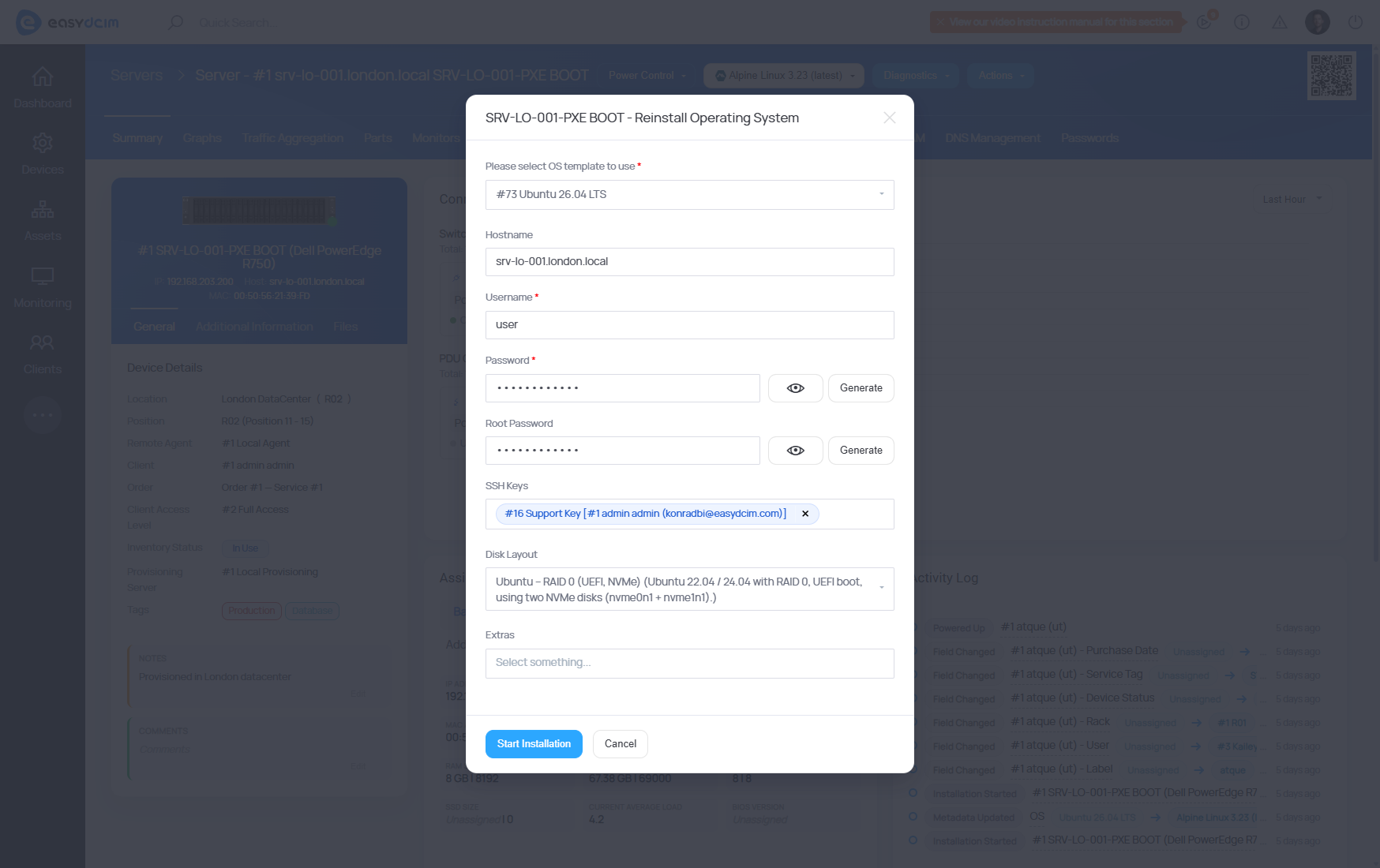
The less obvious newcomer may actually be Alpine Linux.
Despite its relatively small footprint, Alpine has become a favorite in environments where administrators prefer systems that do exactly what they need and little more. Today, it can be found everywhere from container platforms to edge deployments and infrastructure projects where every megabyte counts. Until now, Alpine was not officially supported within EasyDCIM’s automated installation framework. With version 1.25.1, that changes.

The new Alpine Linux 3.23 template offers fully automated provisioning capabilities, including network configuration, user account setup, SSH key deployment, disk layout handling, and post-installation scripts. EasyDCIM achieves this via Alpine’s netboot installation mechanism, dynamically generating APKOVL configurations and delivering packages through its built-in downloader. The result is exactly what infrastructure teams hope for when deploying servers at scale: less manual intervention, fewer opportunities for mistakes, and a faster path from order to ready-to-use machine.
One less Supermicro problem to explain
Every infrastructure platform eventually encounters a category of issue that is not really its fault, yet still lands on its support queue. For many providers using older Supermicro X10 hardware, browser-based KVM access has been one of those problems.
The root cause lies in expired SSL certificates embedded in legacy firmware versions. The consequence is familiar to anyone who has faced it: administrators and customers suddenly lose access to noVNC console sessions, often at the exact moment they need remote access the most.
Version 1.25.1 addresses this long-standing challenge, restoring reliable access to browser-based KVM sessions on affected Supermicro servers. For administrators still running X10 hardware, it means being able to launch a remote console session without first navigating a chain of browser warnings, exceptions, and workarounds.
WHMCS integration enters a new generation
Alongside the work done specifically around EasyDCIM, Dedicated Servers For WHMCS by ModulesGarden also reached an important milestone with the arrival of version 3.0. Although the changelog contains plenty of individual enhancements, they collectively point toward a broader objective: making the connection between EasyDCIM and WHMCS more reliable, more self-sustaining and easier to manage as infrastructure continues to grow.
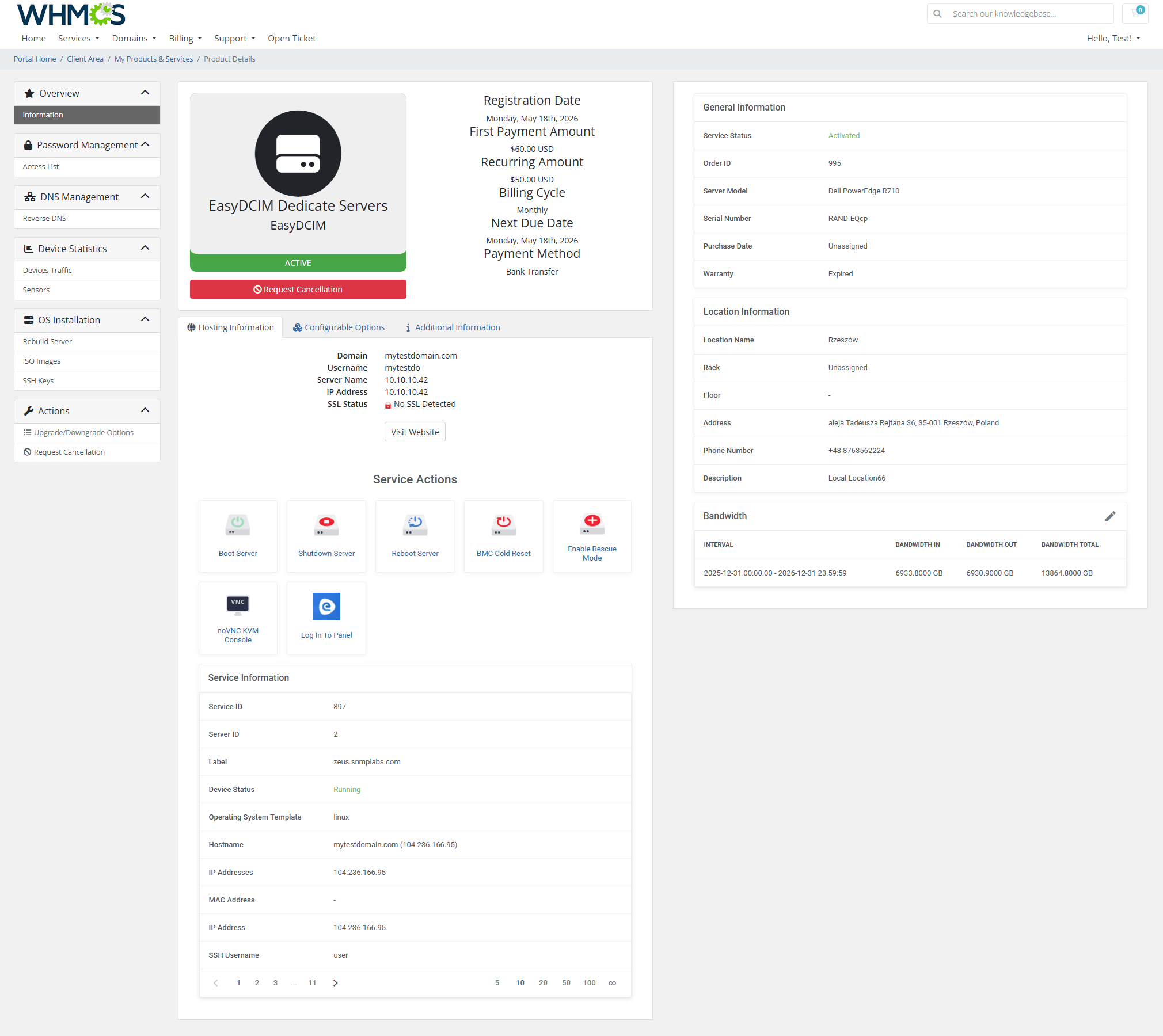
One of the recurring challenges in dedicated server provisioning is ensuring that information remains consistent across multiple systems. Operating system templates change, installation options evolve, disk layouts are adjusted and service offerings expand over time. Keeping all of these elements in sync can easily become a repetitive administrative task, particularly in environments where changes occur frequently.
The latest release significantly reduces that burden by improving synchronization between EasyDCIM and WHMCS. Operating system templates and related provisioning settings can now remain synchronized automatically, helping providers ensure that the options visible during the ordering process accurately reflect what is available within the infrastructure itself. This reduces the need for manual updates while giving administrators and customers a more accurate view of available provisioning options.
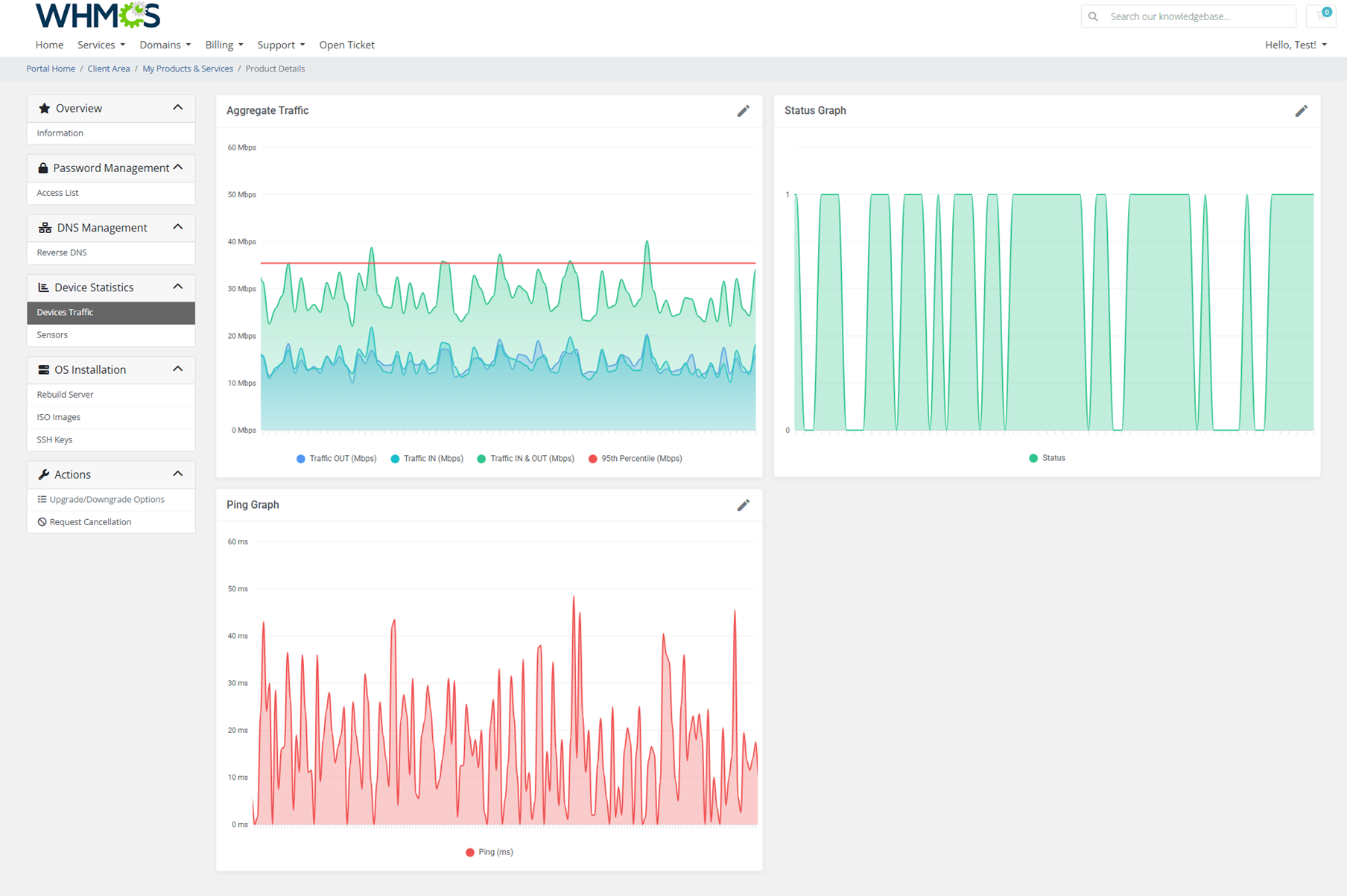
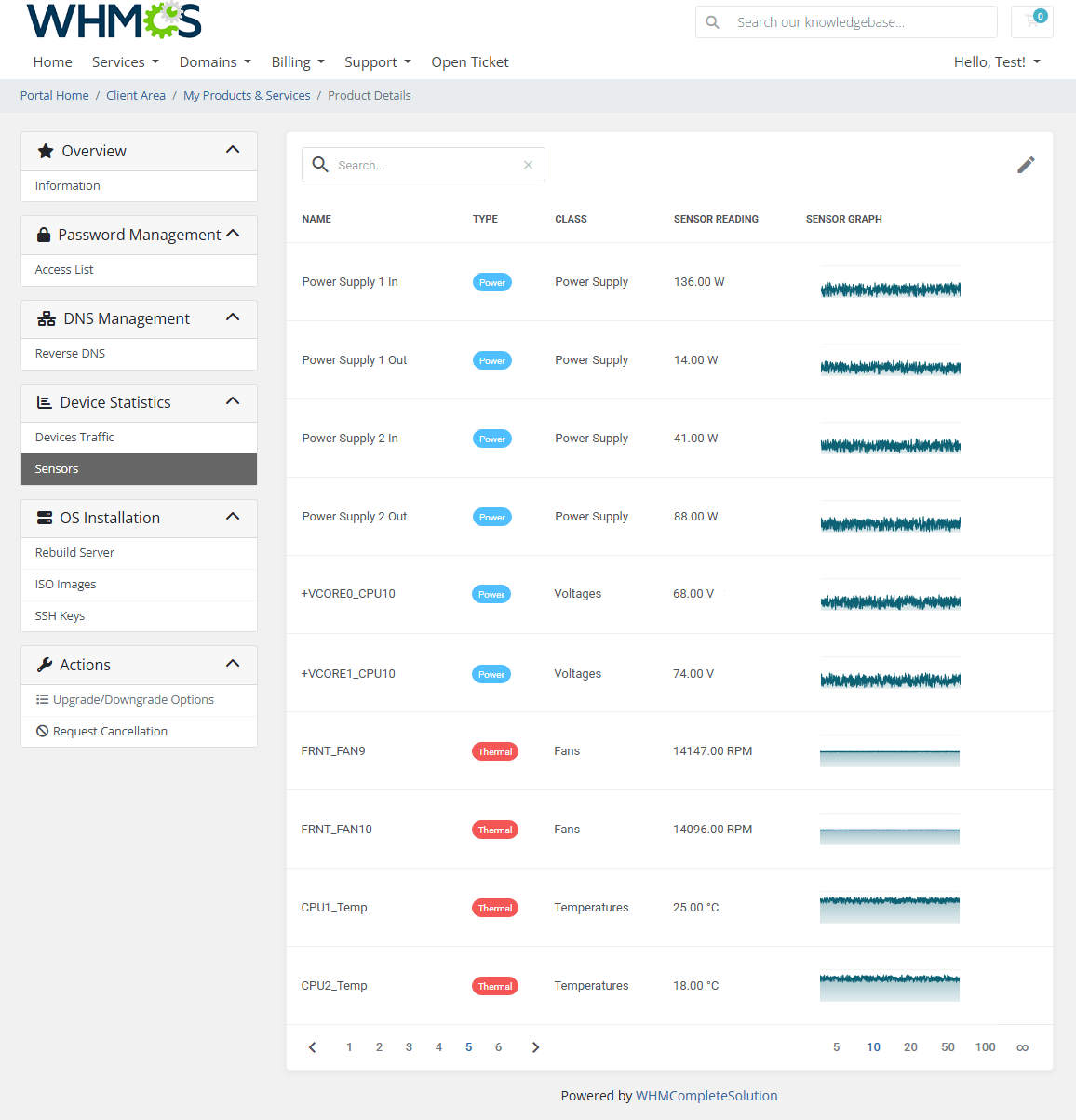
The update also introduces a modernized technical foundation through support for the latest EasyDCIM API v3, creating a stronger base for future development and long-term compatibility. While these architectural improvements largely remain behind the scenes, they play an important role in ensuring that the module can continue evolving without accumulating unnecessary technical debt along the way.
Beyond the larger structural changes, version 3.0 includes a collection of refinements throughout both the admin and client areas. Network information is presented more clearly, traffic statistics are easier to interpret, validation mechanisms provide more meaningful feedback, and numerous interface adjustments simplify daily interactions with the module.
Looking beyond the changelog
Progress in mature infrastructure platforms often comes through removing obstacles, reducing complexity, and refining the countless small interactions that define routine operations. EasyDCIM v1.25.1 is a good example of that process.
It expands support for operating systems customers have been waiting for, resolves a persistent issue affecting older Supermicro deployments and strengthens the relationship between EasyDCIM and the WHMCS system that surround it. Each improvement addresses a different area of the platform, yet all of them share the same goal: making infrastructure management more dependable and less dependent on exceptions.
As work on EasyDCIM v2.0 continues, releases like this help transform long-term plans into something increasingly tangible. The foundations are already in place. What follows now is the steady refinement that brings those foundations together into a platform capable of supporting modern infrastructure with the consistency and flexibility providers expect.