




The latest release is focused on a very real operational problem: how to keep OS installations flexible without turning templates into something that is hard to understand and even harder to maintain. As provisioning scenarios grow more complex, installation templates tend to absorb more and more logic. Over time, this makes them fragile and difficult to reuse across environments. EasyDCIM v1.24.0 addresses this directly by introducing Provisioning Profiles – a new way to deal with installation without constantly modifying base templates. This is an important step toward the broader direction of EasyDCIM 2.0, where essential workflows are easier to evolve and easier to control.
Organizing Installation Logic into Reusable Parts
Provisioning Profiles allow you to move parts of the installation process out of templates and treat them as reusable components. Instead of duplicating logic in multiple places, you attach profiles to templates and have them executed automatically during provisioning.
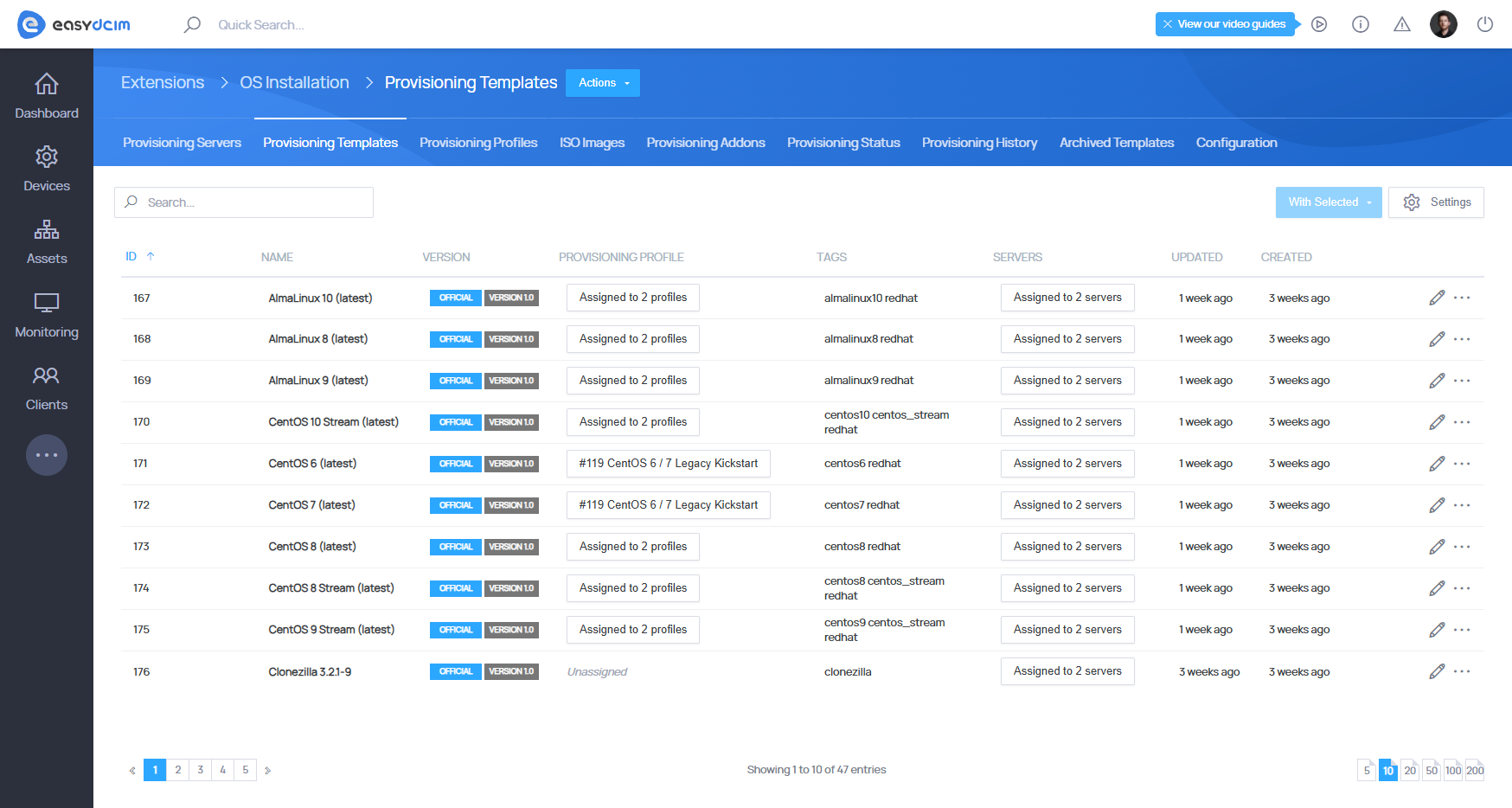
In practice, this makes it much easier to handle advanced installation scenarios. Disk partitioning, OS-specific installers like Kickstart, Preseed, Autoinstall, or Unattend, Windows PE initialization, first-boot configuration, and post-installation tasks can now be clearly separated and reused where needed.
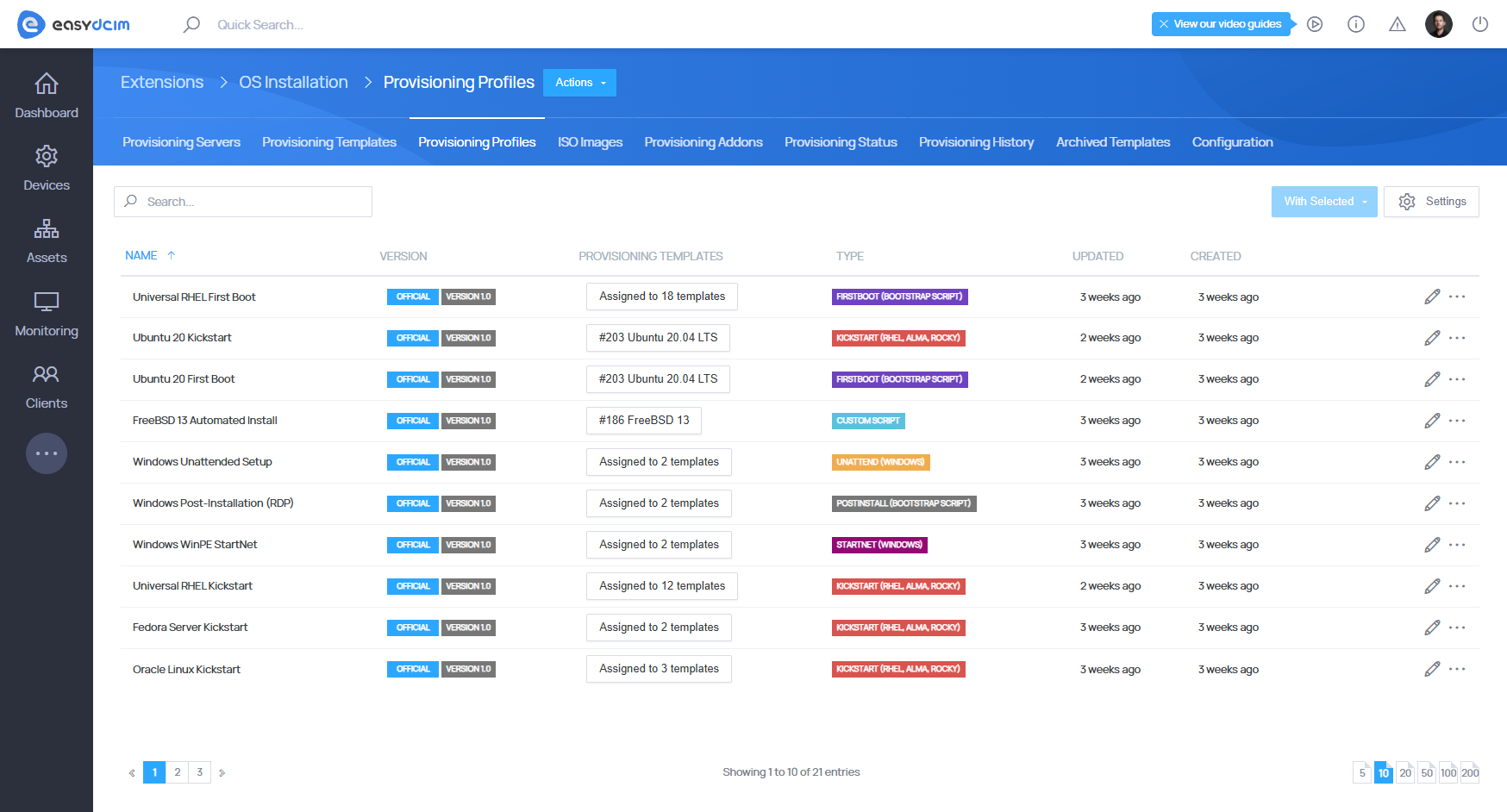
The win here is being able to understand and change provisioning without breaking it. When each part of the process has a clear role, installations are easier to understand, easier to troubleshoot, and safer to change.
Giving Choice: From Official to Custom Profiles
But extending functionality is only part of what this milestone brings. The OS Installation extension arrives with a set of official provisioning profiles maintained by our team. These profiles are synchronized from the license server and cover common installation scenarios for Linux distributions, Windows, ESXi, and rescue environments.
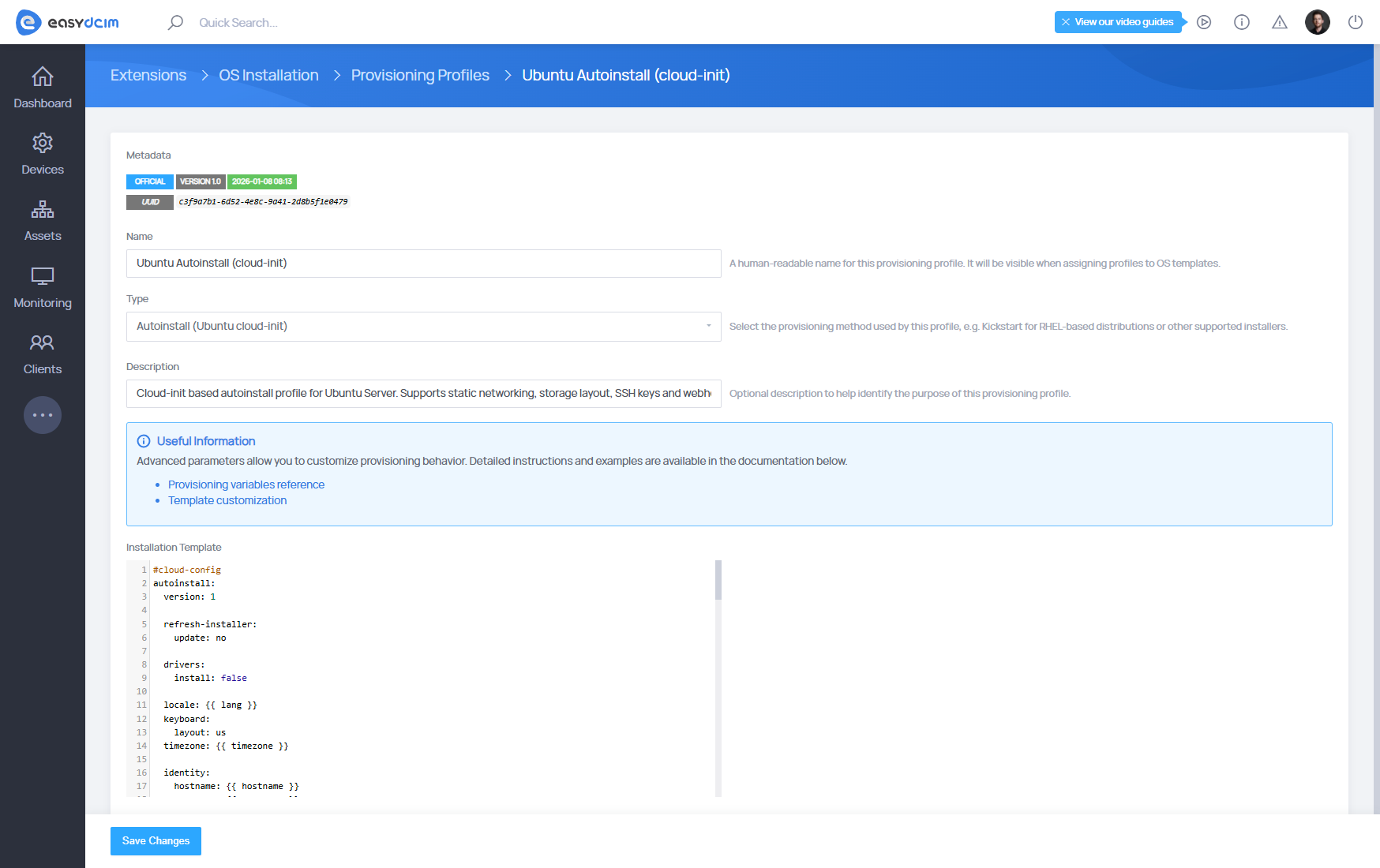
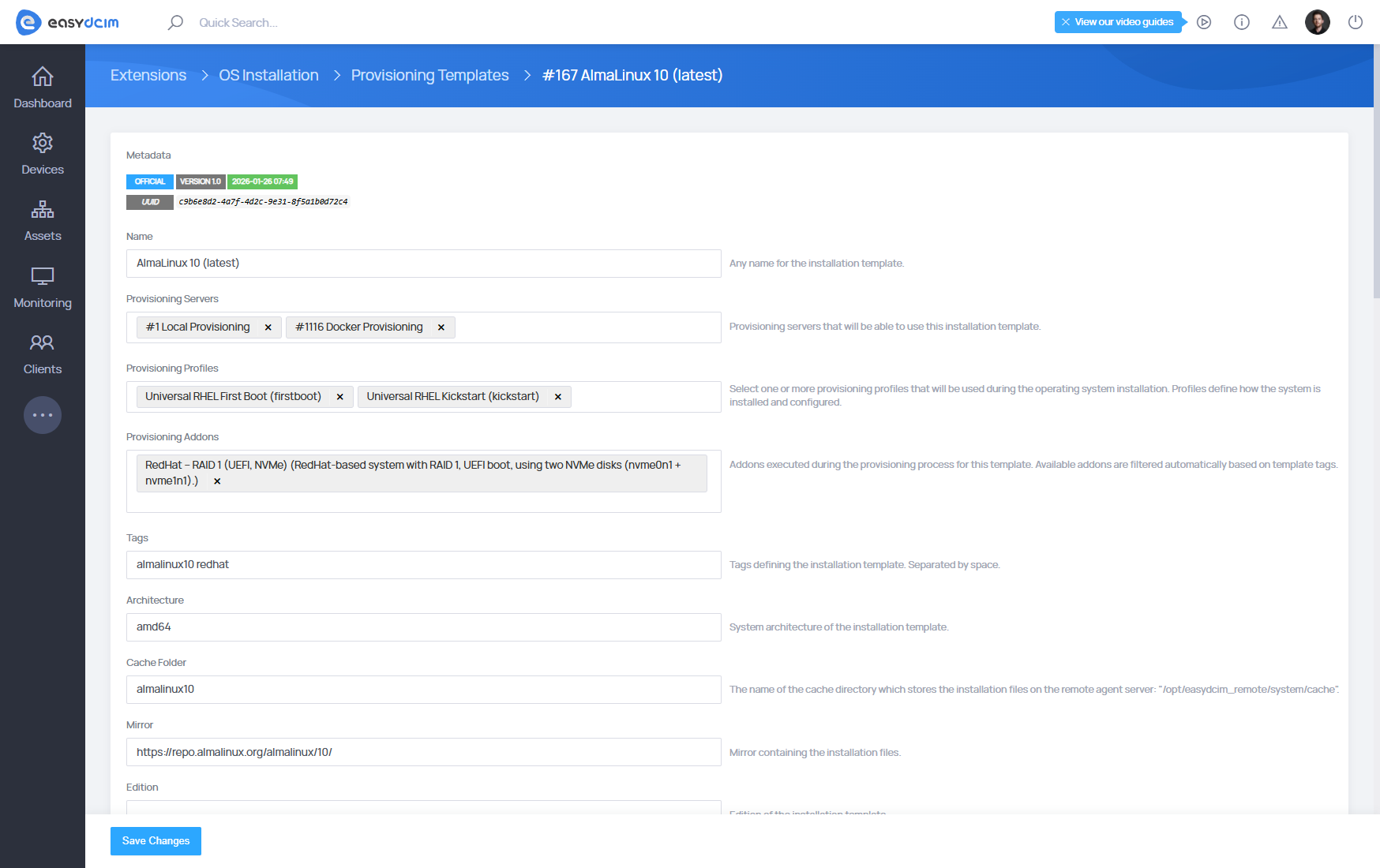
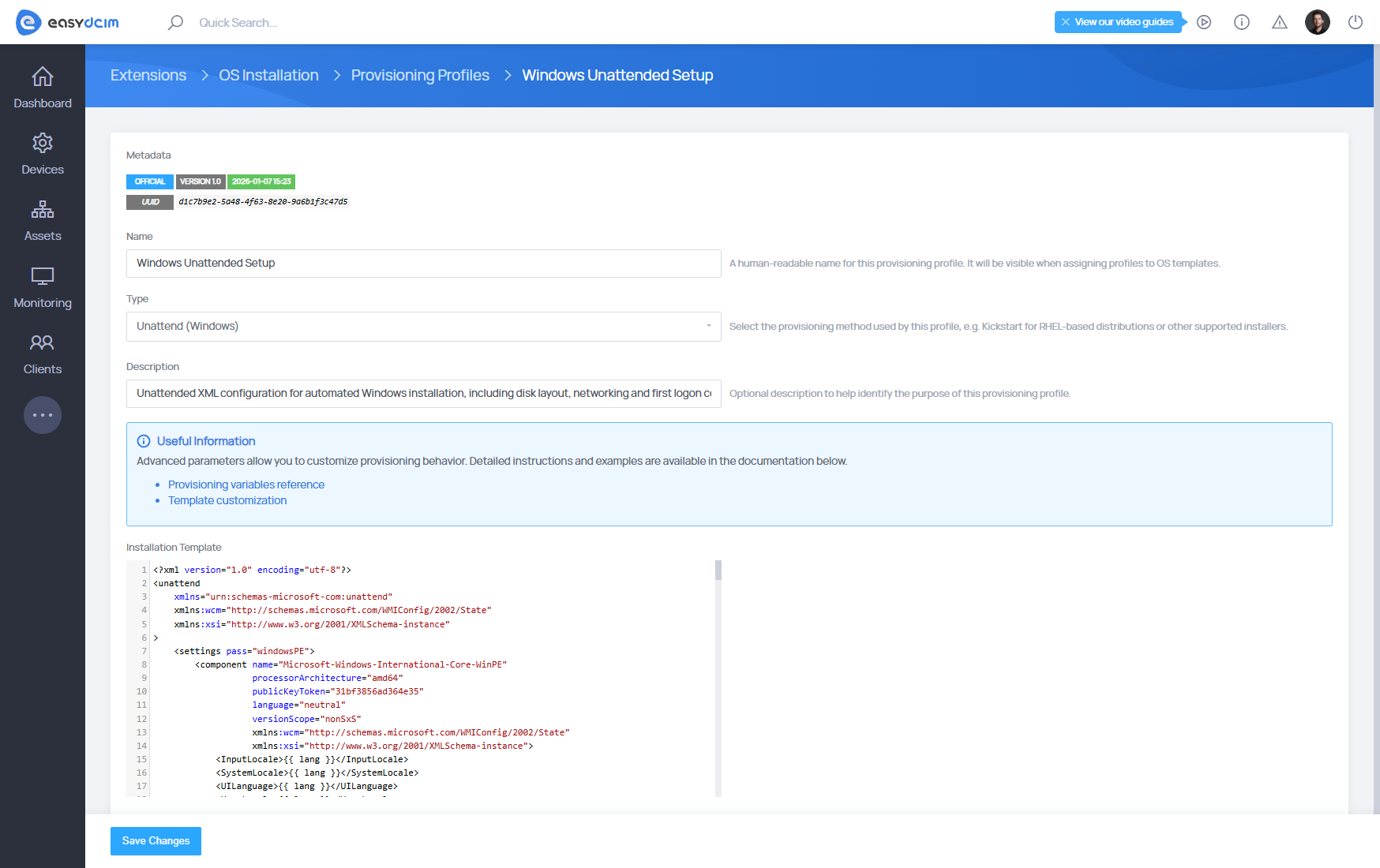
At the same time, you can create and manage your own custom provisioning profiles, tailored to specific environments or internal standards. Official and custom profiles can be combined, updated independently of templates, and reused across multiple installations. This approach gives administrators a solid starting point while keeping full control where defaults stop being enough.
Making OS Provisioning Easier to Maintain
Separating provisioning logic from templates makes the process easier to work with over time. When the same profiles are reused across installations, results stay consistent and changes are easier to track.
Provisioning profiles can be synchronized automatically or manually, without forcing template updates. This makes it possible to improve or adjust provisioning behavior without touching every installation definition. Over time, this reduces maintenance effort and lowers the risk of unintended changes.
Designing DCIM Workflows for the Long Run
Alongside the changes to OS provisioning, EasyDCIM 1.24.0 also brings several updates across other areas of the platform:
- ServerTech STV-4511C Support
PDU Management has been extended with support for ServerTech STV-4511C devices, making it easier to bring these units into existing setups. The update includes automatic discovery via SNMP, detection of available power outlets, and access to power usage data, helping administrators monitor and manage power distribution more consistently across their infrastructure.
- Custom VMware ESXi Templates
ESXi installations can now be based on vendor-specific or custom ISO images, which helps when standard images are not enough. This gives administrators more freedom to align ESXi deployments with their hardware and internal practices, without giving up the benefits of an automated provisioning flow.
- Fedora 43 Server Template
Fedora 43 Server is now available for automated installation, making it a straightforward option for environments that rely on Fedora-based systems. The installation follows the same structured approach as other supported operating systems, so adding Fedora to existing workflows does not require any special handling.
Another Step Toward EasyDCIM 2.0
Last year, EasyDCIM gave a first real preview of version 2.0 with a fully rebuilt Client Area. It was a clear signal that some parts of the platform were due for a deeper rethink, starting with how users interact with it every day.
The new year has barely begun, and EasyDCIM v1.24.0 pushes that change further. Provisioning Profiles bring the same mindset into OS installation: areas that directly affect how efficiently infrastructure can be deployed, maintained, and scaled. Together, the new Client Area and Provisioning Profiles address two sides of the same challenge: giving data center teams better control without burying them under extra configuration.
EasyDCIM 2.0 is coming later this year. What you see in version 1.24.0 is not a preview or a concept, but working pieces of that future, already solving real problems today.